EN / CN
Products
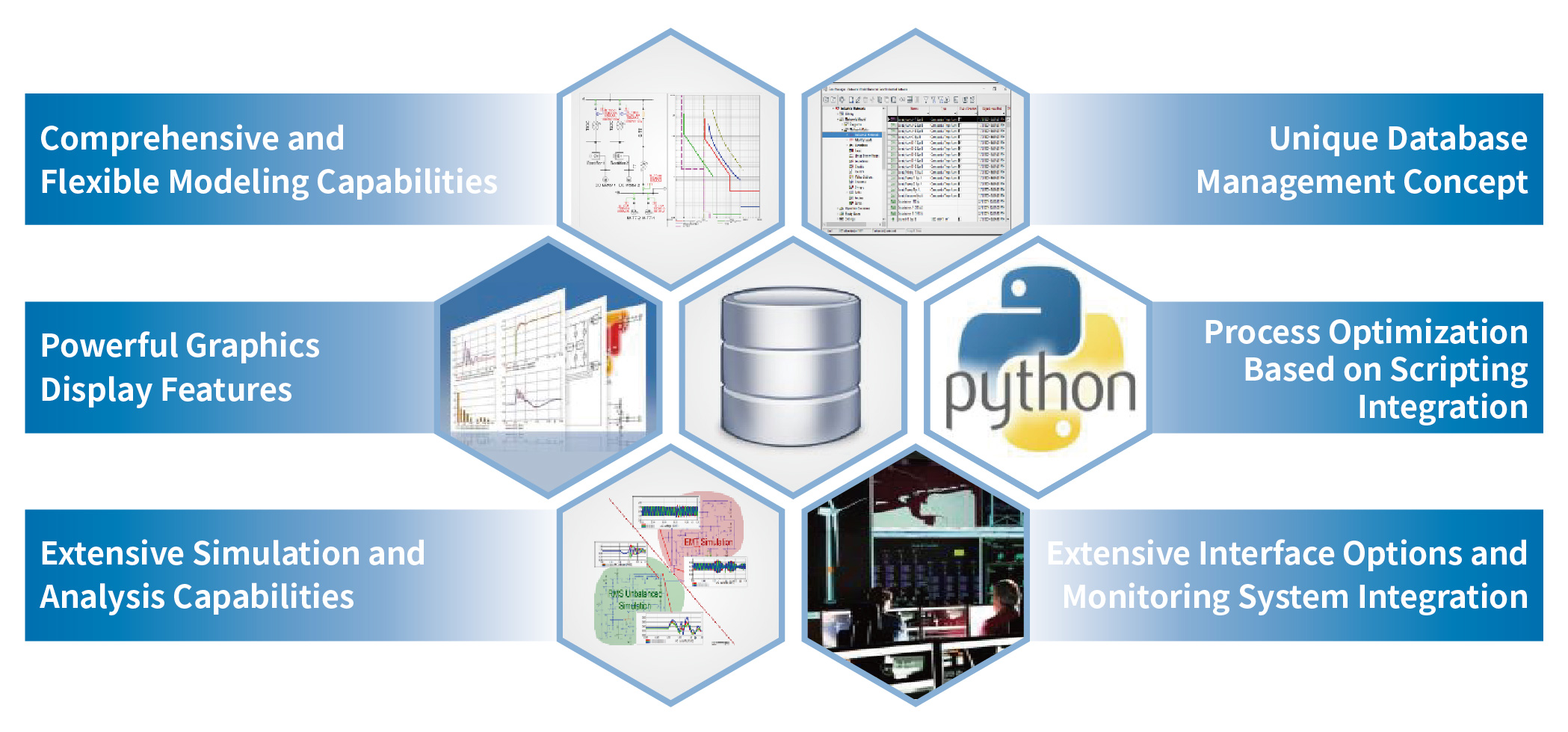
Keliang's product portfolio spans all stages—from system digital design and simulation, rapid prototyping control, hardware-in-the-loop (HIL) simulation, testing and verification, to device interfacing—creating a complete process development and testing toolchain.
PowerFactory—Power System Simulation Software
Overview

PowerFactory is a comprehensive power system simulation software developed by German company DIgSILENT GmbH. It covers core simulation functions for power system planning and operation. With 30 years of market application, it serves over 160 countries and regions, boasts more than 12,000 global users, and is widely adopted by utilities, equipment manufacturers, and academic institutions worldwide. As China's power sector expands globally, PowerFactory has become a key simulation platform for domestic research units, certification agencies, and universities.


Software Architecture

产品中心-03.jpg

Product Introduction

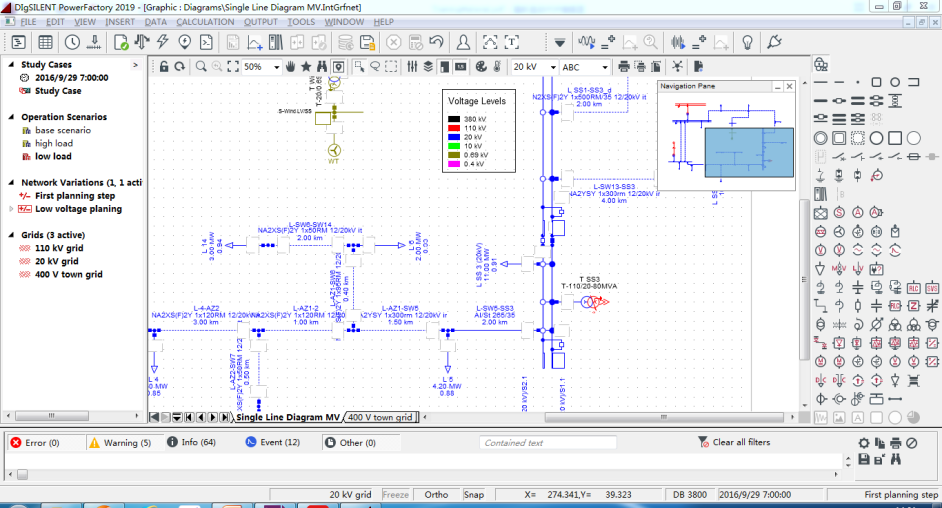
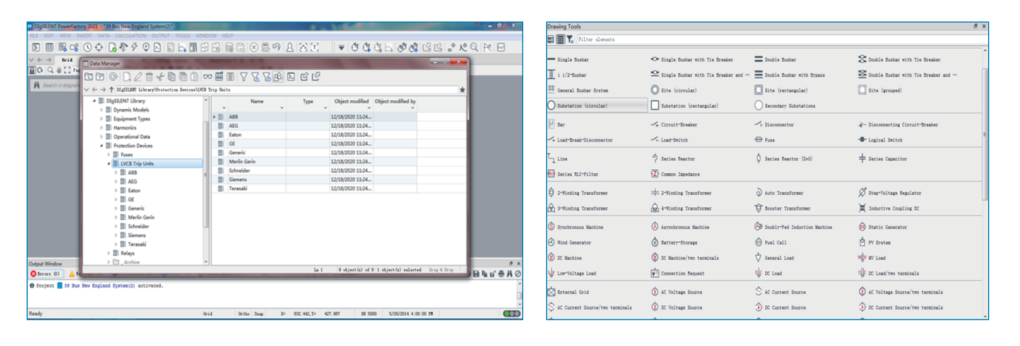
User-friendly interface

image.png


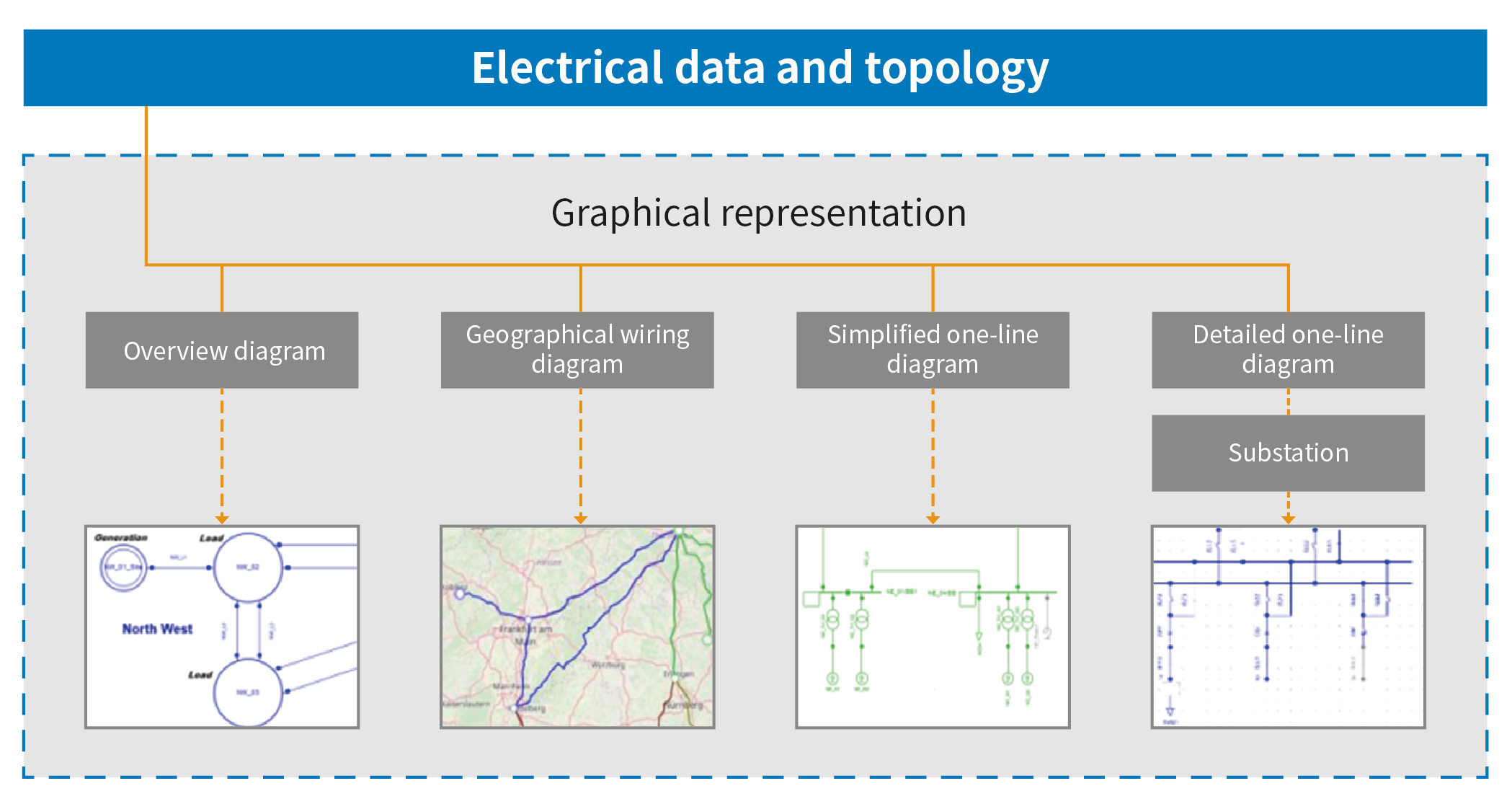
Multiple graphical display functions

产品中心-04.jpg

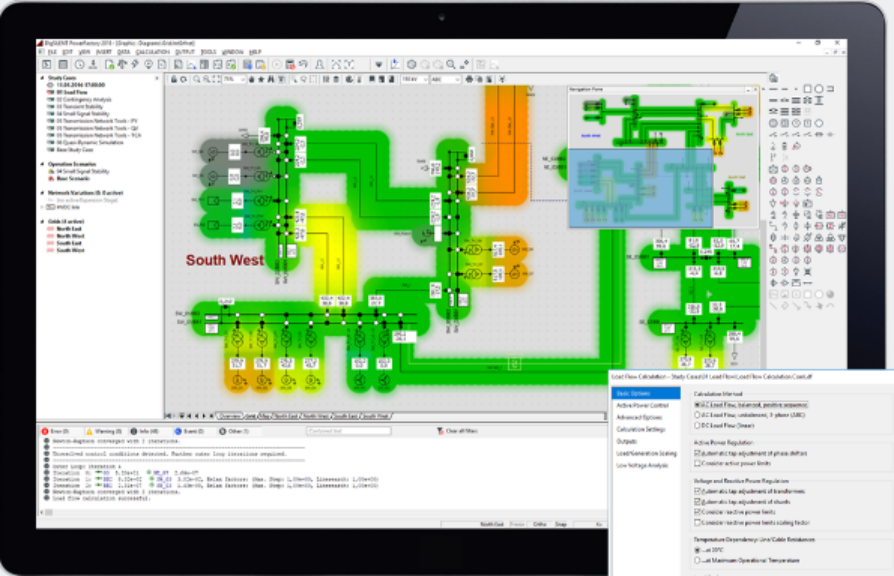
Customizable color display of calculation results

image.png


Comprehensive Model Library

PowerFactory provides a comprehensive library of power system component models, including models for generators, motors, controllers, dynamic loads, lines, and transformers. Models for the electrical parts of wind turbines, such as doubly-fed induction generators and converters, are included in the standard elements of the existing model library. The wind speed, mechanical drive train, aerodynamic parts, and control systems of wind turbines are modeled using the dynamic simulation language (DSL) within the software. Users can build custom models according to their requirements.

image.png

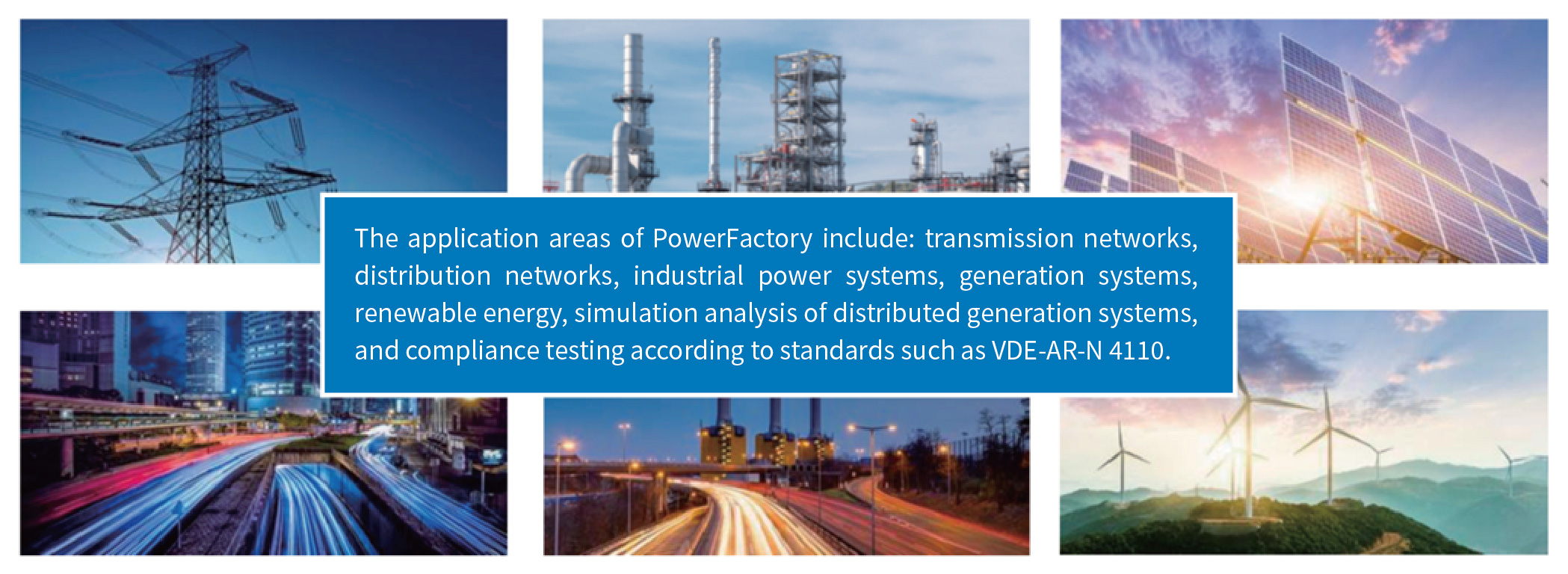
Application field

产品中心-06.jpg


Product Advantages

l Powerful functionality, encompassing almost all power system simulation and analysis capabilities.

l Database-centric data storage with hierarchical, object-oriented data management and a flexible project scenario system.

l Comprehensive library of power system component models, including generators, motors, controllers, dynamic loads, lines, transformers, shunt devices, and models for the electrical parts of wind turbines such as Doubly-Fed Induction Generators (DFIG) and converters.

l Capability for data import and export via Excel.

l Support for combined electromechanical and electromagnetic transient simulation.

l Windows-standard operational model and integrated graphic-modeling processing approach.

l DSL for continuous processes and DPL for procedural automation.

l Extensive interface options and system integration capabilities.

l Localized Chinese version.

l Abundant application cases.

l Proactive and effective technical support


Product Features

PowerFactory software encompasses almost all commonly used power system analysis functions, such as power flow calculation, short-circuit calculation, electromechanical and electromagnetic transient calculation, harmonic analysis, small-signal stability analysis, and reliability analysis. It eliminates the need for repeated modeling, significantly improving modeling efficiency. Another key feature is that PowerFactory combines electromechanical and electromagnetic transient analysis models for co-simulation. This enables it to analyze transient faults in the grid while also studying long-term power quality issues and control methods.

l Base Functions

  • Load Flow Analysis

  • Short-Circuit Analysis

  • Load Flow Sensitivities

  • Basic MV/LV Network Analysis

  • Power Equipment Models

  • Network Representation

  • Network Model Management

  • Network Diagrams and Graphic Features

  • Results and /Reporting

  • Data Converter


l Advanced functions:

  • Contingency Analysis 

  • Quasi-Dynamic simulation 

  • Network Reduction 

  • Protection Functions 

  • Arc-Flash Analysis 

  • Cable Analysis 

  • Power Quality and Harmonic Analysis 

  • Connection Request Assessment 

  • Transmission Network Tools 

  • Distribution Network Tools 

  • Outage Planning 

  • Probabilistic Analysis 

  • Reliability Analysis Functions 

  • Optimal Power Flow(OPF)

  • Unit commitment and Dispatch Optimisation

  • Techno-Economical Analysis

  • State Estimation

  • Stability Analysis Functions

  • Electromagnetic Transients

  • Motor Starting Functions 

  • Small Signal Stability

  • System Parameter Identification

  • Interfaces 

  • Scripting and Automation 

  • DPL/DSL/QDSL Crypting Function 

  • PSS/E Export 


l Extended functions: 

  • Supports co-simulation between PowerFactory and Simulink electrical networks, enabling electromechanical-electromagnetic hybrid simulation.

  • Supports co-simulation between PowerFactory and RT-LAB electrical networks, enabling electromechanical-electromagnetic hybrid real-time simulation.

  • Supports conversion of PSASP models to PowerFactory models.

  • Supports bidirectional conversion between Matpower grid models and PowerFactory models.

  • Supports single/multi-port frequency scanning for large-scale PowerFactory grid models.

  • Supports data conversion (DOLE) for interfaces between SCADA/GIS.

  • Supports data conversion between PSS/E and PSS/U.


Cases

l An electric power research institute has built a photovoltaic model based on PowerFactory, conducted in-depth research on the causes of harmonics generated by photovoltaic power generation systems and the propagation mechanism of harmonics in distribution networks, and proposed solutions for the impact of photovoltaic integration on harmonic voltage and current in distribution networks from the perspectives of grid connection points and integration capacity.


l An electric power design institute has established distributed photovoltaic system models and detailed distribution network models based on PowerFactory. It has conducted in-depth research on the impacts of different photovoltaic system access points and capacities on the short-circuit current and line protection of the distribution network, and proposed corresponding solution strategies.


l An electric power company established a supercapacitor-battery hybrid energy storage model based on PowerFactory, and through research, confirmed the feasibility and fundamental scheme of using the hybrid energy storage system to suppress voltage fluctuations.


l An electric power design institute conducted a conductor cross-section selection study for 10kV overhead lines in low-density load areas of Sichuan province to address low voltage issues. Based on PowerFactory simulations of typical scenarios, the research analyzed voltage rise at line ends under different load conditions and conductor cross-sections, ultimately providing a reasonable power supply radius for overhead line selection.


l Based on the research background of oilfield power grids, a university applied PowerFactory to build an engineering model of a grid-connected photovoltaic (PV) power generation system. It analyzed and introduced the simulation modeling principles of relay protection using this software. On this basis, it quantitatively analyzed the impact of PV system integration on the short-circuit current and line protection of distribution networks, and proposed solutions and strategies.


l A university utilizes the secondary development capabilities of PowerFactory software and, through probabilistic simulation of the AGC dynamic response in a two-area interconnected power grid, accomplishes a probabilistic evaluation of AGC control performance from both technical and economic perspectives.


l A university conducted research on low voltage ride-through of doubly-fed wind power generation systems based on PowerFactory.


+86-21-54234720-8601